

Our Before and After illustrations show how secondary glazing works, changing comfort, draughts, condensation and heating performance on a cold day. An insulated window will make you more comfortable, and reduce the cost of staying warm. For many Extraglaze customers they get to enjoy their home again, instead of suffering it! What do they say... Love it, don't leave it?
Contact Us Today to learn more and get your secondary glazing.
Cold day: scenario 1
This room has the radiator located in the wrong place. The correct place would be under the window.
Before
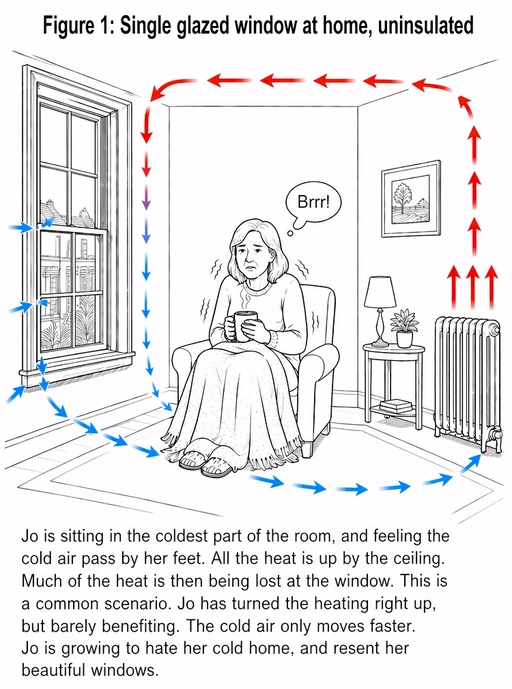
Bills: Very high
Draughts: Unbearable
Black mould: Unmanageable
Condensation: Lots! Time consuming. Just keeps coming.
Heating: Constantly running yet ineffective
Thermostat: Set to maximum, but the room still feels cold.
After
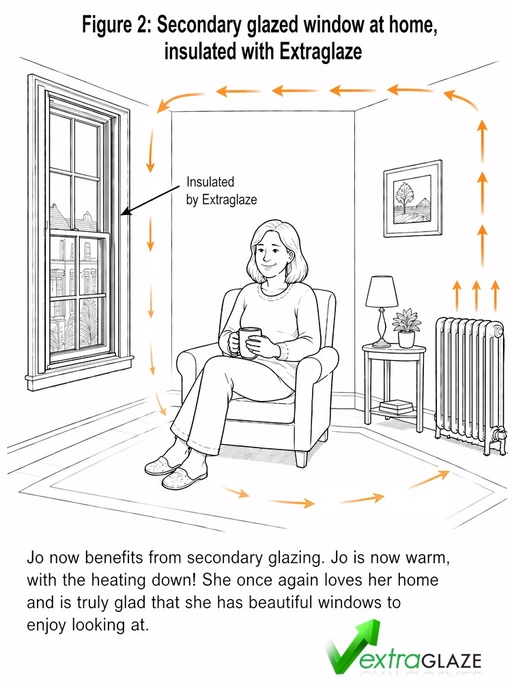
Bills: Significantly reduced
Draughts: Moderate (by her feet)
Black mould: Stopped dead
Condensation: Removed with a single wipe. Sometimes eliminated.
Heating: Controlled by the thermostat
Thermostat: set to medium, maintaining a warm room temperature
Cold day: scenario 2
This room has the radiator in the correct place. The secondary glazing will be especially effective in rooms with tall ceilings.
Before
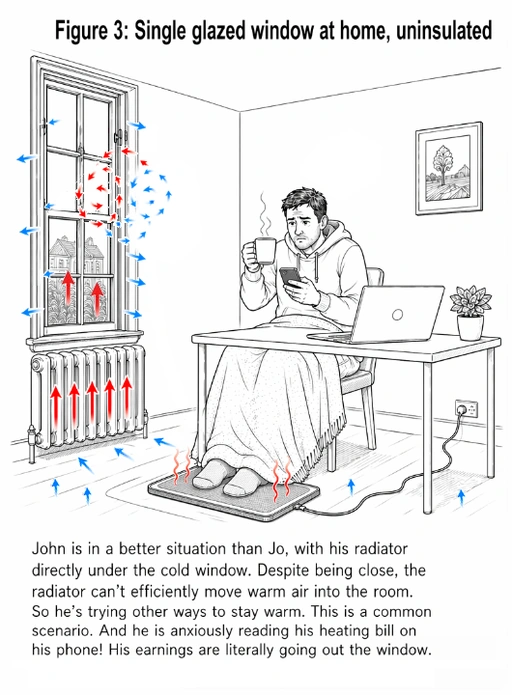
Bills: Very high
Draughts: Unpleasant
Black mould: Manageable
Condensation: Lots in the morning. Dries off with the heating on.
Heating: Constantly running
Thermostat: Set higher than necessary. Some parts of the room still feel cold.
After
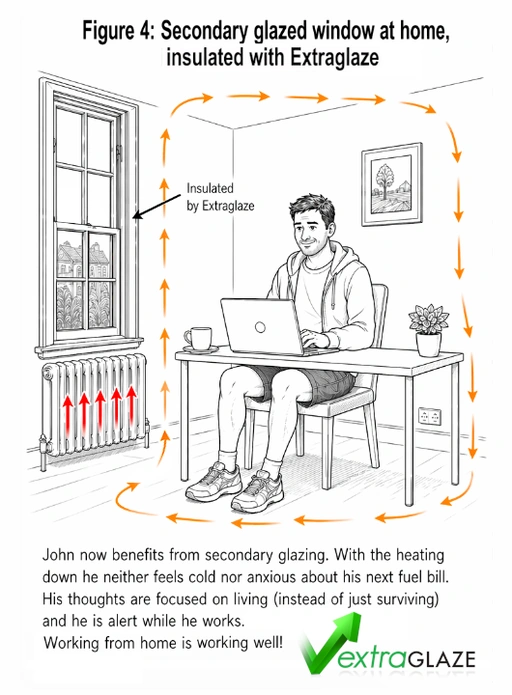
Bills: Significantly reduced
Draughts: None
Black mould: Stopped dead
Condensation: Only if the heating is off. Removed with a single wipe. Otherwise eliminated.
Heating: Gets to temperature very quickly, then controlled by the thermostat.
Thermostat: set to medium, maintaining a warm room temperature
Notes about condensation
Even with secondary glazing installed condensation is very much a factor of how much moisture is in the home, corresponding to the activities and number of people living there. Two people living in a large house might not experience much condensation. Most Extraglaze customer reviews (look for the Feefo button and yellow stars) claim it has elimintated this problem for them.
The materials used in your choice of secondary glazing also matter. An aluminium frame with glass will rarely stop condensation because these materials transfer heat rapidly. Extraglaze, however, has no metal frame and is glazed with acrylic, being warm to the touch, so it makes a far superior thermal barrier.
When behind thermal blinds and shutters, secondary glazing will cool overnight because it is denied the warmth of the room. You may see condensation when you open them in the morning.










Great samples
Very helpful on phone