

Safety hook
Safety hook
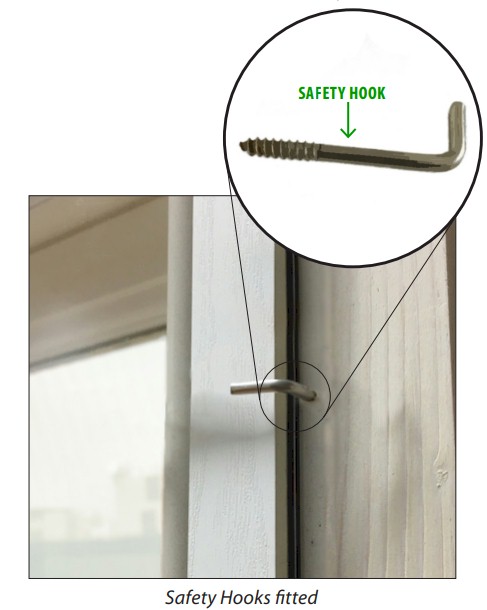
Important guidance is shown below
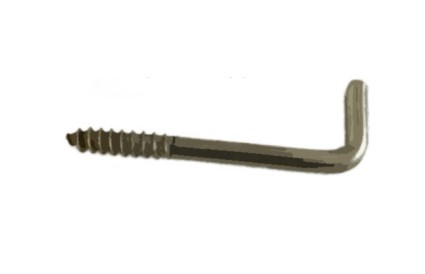
Shoulderless safety hook, as described in our Guides.
Stainless steel, self colour. Sizes are approximate.
APPLICATION: Think "fall-safe". Use these to reduce the risk of a fall. Install two of these hooks beneath any panel that is not close to a sill or similar ledge. ALWAYS INSTALL SUFFICIENT HOOKS IF FOOT TRAFFIC IS BENEATH A PANEL. Do not hesitate to apply additional safety measures. Note for tall panels and especially panels that receive a lot of sunshine: if these panels come loose these may flop forward with a duck-under motion, so fit one or more hooks either side as the situation requires. Supplement with or exchange for curtain wires where prudent.
INSTALLATION: Fit with a small gap not exceeding 3mm to the panel edge. Prepare a pilot hole using a 2.5mm or 3mm drill bit, then fit the hook. Take great care - the drill must not touch the panel. Use a tiny dab of lubricant such as salt-free butter or spread. Do not exert the screw with much more than finger strength or the screw may break (stainless steel is not as tough as regular steel). When screwing into a window frame the short leg will rotate like a clock hand, therefore it needs a 15mm radial clearance.
IN USE: the short leg should sit over the panel edge with no more than a 3mm gap. A quarter turn (finger strength should be sufficient) will allow the panel to be removed.






Reviews

-
2 months agoWe love thenSimple website
Great samples
Very helpful on phone
-
2 months agoGreat product
-
3 months agoExcellent experience
-
5 months agoStuart Day
-
6 months agoAll very helpful and efficient
Sam Mahon -
8 months agoGreat productWould definitely recommend
Good product and customer service
-
9 months agoGreat QualityPhil Birtwhistle
-
9 months agoGreat product and serviceSLC
-
9 months agoFantastic, helpful company
-
9 months agoan excellent company to deal withJames


Extra news
How to Stop Condensation on Windows
How to Stop Condensation on Windows
Condensation on windows is a common issue faced by many homeowners, especially those with single-glazed windows. Understanding the root causes and implementing effective solutions can significantly reduce this problem. We'll explore how Extraglaze secondary glazing can help mitigate window condensation and provide practical tips for addressing the underlying causes.
Autumn Condensation: Why Your Windows Start "Sweating" as It Gets Colder
Waking up to windows clouded with moisture is one of the first signs that autumn has truly arrived. As the mornings turn crisp and the heating clicks back on, many homeowners notice water gathering along the bottom of their window panes, sometimes running down the glass in small streams.
This seasonal shift catches plenty of people off guard. The condensation that seemed to vanish over summer returns almost overnight, and it can feel like your windows have suddenly developed a problem. In reality, the change in weather is the trigger.
Secondary Glazing vs a Glass Upgrade to Double Glazing: Which Is Right for Your Home?
The Window Efficiency Debate
In the quest for energy efficiency and comfort, homeowners often find themselves at a crossroads: should they opt for secondary glazing or invest even more in upgrading their existing windows by swapping the old glass for some modern double glazing? Both options offer promise to improve insulation and reduce energy bills, but they are significantly different in their approaches and budgets. This guide explores the nuances of each solution to help you decide which is best for your home.
Help & Guides


 |
 |
